Phần 15: Series 1000 Từ Vựng Cơ Bản
English
Last updated
Tue, 17-Mar-2026
English
Last updated
Tue, 17-Mar-2026
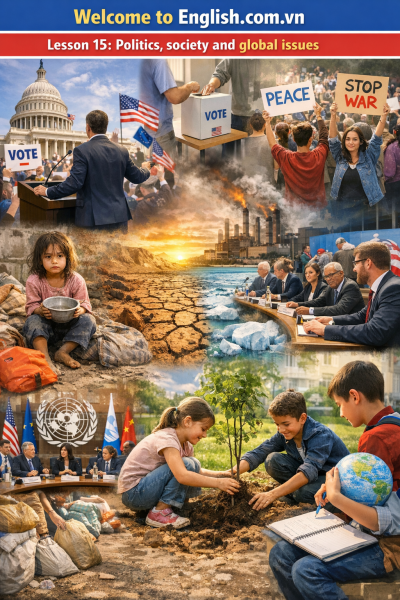
Chào mừng bạn quay trở lại với English.com.vn. Hiểu về xã hội và các vấn đề xung quanh là một cách tuyệt vời để chúng ta học tiếng Anh thực tế. Trong bài học này, chúng ta sẽ học các từ vựng cơ bản về chính phủ, quyền của công dân và những vấn đề lớn trên thế giới. Dù đây là chủ đề về xã hội, nhưng mình đã chọn những từ gần gũi nhất để các bạn mới bắt đầu có thể dễ dàng tiếp thu.
"We all live in a big world, and we are part of
a society. In every country, there is a government that helps
people live together in peace. The leaders of the country have a very
important job. They make laws to keep everyone safe and happy. As a citizen,
you have many rights. For example, you have the freedom to speak
and the right to go to school. In many places, people can vote to choose
their leaders. This is called a democracy, where the power
belongs to the people.
However, our planet also faces some big global
problems today. One of the biggest issues is poverty. This means many
people do not have enough food, water, or a house to live in. We need to find a
solution to help them. Another problem is the climate. The
weather is changing, and this is bad for the environment. Sometimes,
there is a conflict between different groups or countries. When this
happens, we lose peace, and life becomes very difficult for everyone.
International organizations try to work together to fix
these problems. They want to make the world a better place for every child.
As a student, you can help your community too. You can follow the rules,
be kind to your neighbors, and protect nature. Learning about politics
and social issues is important. It helps you understand the news and have your
own voice. I believe that if we all work together, we can build a very
good society for the future. What do you do to help the world every day?"
2. Danh sách từ vựng cốt lõi
|
STT |
Vocabulary |
IPA |
Loại
từ |
Nghĩa
tiếng Việt |
|
1 |
Society |
/səˈsaɪəti/ |
Danh từ |
Xã hội |
|
2 |
Government |
/ˈɡʌvənmənt/ |
Danh từ |
Chính phủ |
|
3 |
Leader |
/ˈliːdə(r)/ |
Danh từ |
Nhà lãnh đạo |
|
4 |
Law |
/lɔː/ |
Danh từ |
Luật pháp |
|
5 |
Rights |
/raɪts/ |
Danh từ |
Quyền lợi |
|
6 |
Citizen |
/ˈsɪtɪzn/ |
Danh từ |
Công dân |
|
7 |
Democracy |
/dɪˈmɒkrəsi/ |
Danh từ |
Nền dân chủ |
|
8 |
Vote |
/vəʊt/ |
Động từ |
Bầu chọn |
|
9 |
Freedom |
/ˈfriːdəm/ |
Danh từ |
Sự tự do |
|
10 |
Global |
/ˈɡləʊbl/ |
Tính từ |
Toàn cầu |
|
11 |
Poverty |
/ˈpɒvəti/ |
Danh từ |
Sự nghèo đói |
|
12 |
Climate |
/ˈklaɪmət/ |
Danh từ |
Khí hậu |
|
13 |
International |
/ˌɪntəˈnæʃnəl/ |
Tính từ |
Quốc tế |
|
14 |
Solution |
/səˈluːʃn/ |
Danh từ |
Giải pháp |
|
15 |
Conflict |
/ˈkɒnflɪkt/ |
Danh từ |
Xung đột |
3. Điểm ngữ pháp trọng tâm (A1-A2)
Lời kết:
Dù là những chủ đề lớn, nhưng khi bắt đầu bằng những từ vựng
đơn giản, bạn sẽ thấy chính trị hay xã hội không hề khó như mình nghĩ. Hãy luyện
nghe bài đọc trên để làm quen với cách dùng từ trong các ngữ cảnh trang trọng
nhưng vẫn dễ hiểu nhé.