Phần 10: Series 1000 Từ Vựng Cơ Bản
English
Last updated
Tue, 17-Mar-2026
English
Last updated
Tue, 17-Mar-2026
Chào mừng bạn quay trở lại với English.com.vn. Mua sắm không chỉ là nhu cầu thiết yếu mà còn là một kỹ năng quan trọng trong đời sống hiện đại. Trong bài học này, chúng ta sẽ đi sâu vào thế giới của tiêu dùng: từ việc lựa chọn hàng hóa tại siêu thị, cách săn tìm ưu đãi đến việc quản lý ngân sách cá nhân một cách thông minh nhất.
"Shopping is an essential part of our daily life, and
understanding how to manage money is a vital skill for everyone. Every
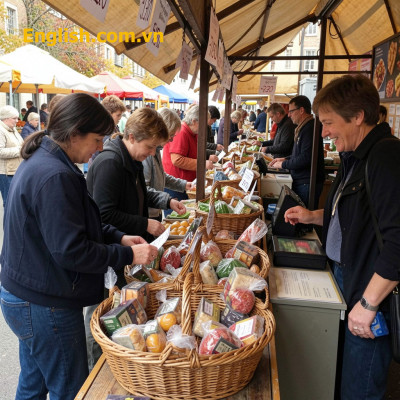
weekend, I enjoy going to the local market or a large supermarket
in the city center. Before I leave my house, I always sit down and make a
detailed list of every item I need to buy. This simple
habit helps me stay focused and prevents me from spending too much money on
things I do not really need.
When I arrive at the store, the first thing I do is
look at the price tag of each product on the shelf. I like to
compare prices between different brands to find the best deal. If the price of
an item is too high, I usually do not buy it immediately. Instead, I
will wait for a big sale or a special discount during the holiday
season. For example, last month, I wanted to buy a new shirt at the mall,
but it was very expensive. I waited for two weeks, and finally, I got a thirty
percent discount. It felt great to save some money!
In today's world, we have many ways to pay for our
goods. When I am at the cashier, I can choose to use cash if I
have small bills in my pocket. However, for a large bill, using a credit
card is much more convenient and safer. After the transaction is finished,
the cashier always gives me a receipt. I always keep this piece of paper
carefully because it is the only proof of my purchase. If the product has a
problem later, I can use the receipt to get my money back. By tracking my
spending every day, I can build a better financial habit for my future."
2. Danh sách từ vựng cốt lõi
|
STT |
Vocabulary |
IPA |
Loại
từ |
Nghĩa
tiếng Việt |
|
1 |
Market |
/ˈmɑːkɪt/ |
Danh từ |
Chợ |
|
2 |
Supermarket |
/ˈsuːpəmɑːkɪt/ |
Danh từ |
Siêu thị |
|
3 |
Buy |
/baɪ/ |
Động từ |
Mua |
|
4 |
Money |
/ˈmʌni/ |
Danh từ |
Tiền |
|
5 |
Price |
/praɪs/ |
Danh từ |
Giá cả |
|
6 |
Item |
/ˈaɪtəm/ |
Danh từ |
Món hàng/Vật dụng |
|
7 |
High |
/haɪ/ |
Tính từ |
Cao (Giá cao) |
|
8 |
Sale |
/seɪl/ |
Danh từ |
Đợt giảm giá/Bán hàng |
|
9 |
Discount |
/ˈdɪskaʊnt/ |
Danh từ |
Sự giảm giá |
|
10 |
Cashier |
/kæˈʃɪə(r)/ |
Danh từ |
Thu ngân |
|
11 |
Pay |
/peɪ/ |
Động từ |
Thanh toán |
|
12 |
Cash |
/kæʃ/ |
Danh từ |
Tiền mặt |
|
13 |
Credit card |
/ˈkredɪt kɑːd/ |
Danh từ |
Thẻ tín dụng |
|
14 |
Receipt |
/rɪˈsiːt/ |
Danh từ |
Hóa đơn/Biên lai |
|
15 |
Store |
/stɔː(r)/ |
Danh từ |
Cửa hàng |
3. Điểm ngữ pháp trọng tâm
Lời kết:
Chúc mừng bạn đã hoàn thành chặng đường 10 bài đầu tiên! Việc
nắm vững từ vựng về mua sắm và tiền tệ sẽ giúp bạn tự tin hơn rất nhiều khi bước
ra môi trường thực tế. Hãy luyện nghe đoạn văn trên thật kỹ để chuẩn bị cho bài
học tiếp theo nhé.